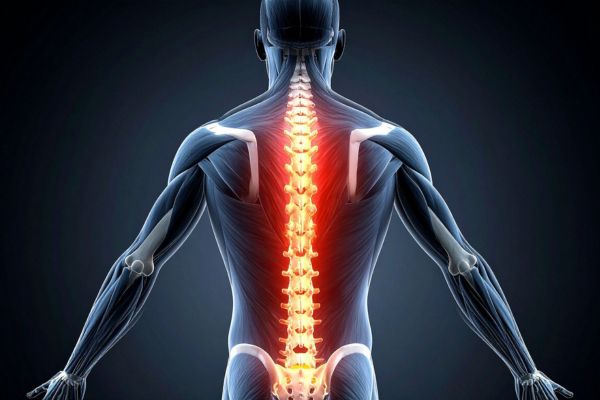
Spinal stenosis occurs when spaces within the spine become narrower, potentially placing pressure on nearby nerves. Depending on its location and severity, it may cause back pain, numbness, weakness, tingling, or difficulty walking.
Interest in stem cell therapy for spinal stenosis has increased as regenerative medicine has developed. However, cellular therapies should not be viewed as a proven method for reversing spinal canal narrowing. Current evidence is still developing, and suitability depends on the cause of symptoms, degree of nerve compression, imaging findings, and overall health.
Why Spinal Stenosis Causes Symptoms
Understanding the condition itself is important before considering stem cell therapy for spinal stenosis. Narrowing can occur in different parts of the spine, although the lumbar and cervical regions are commonly affected.
Age-related degeneration can contribute to spinal stenosis. Changes may include bone spurs, disc degeneration, thickened ligaments, or other structural abnormalities that reduce space around nerves.
Symptoms do not always correspond directly with the amount of narrowing visible on a scan. One person may have significant imaging findings with limited symptoms, while another experiences considerable pain or mobility problems.
For this reason, diagnostic imaging is interpreted alongside medical history, physical examination, symptoms, and neurological findings. The goal is to determine whether spinal stenosis is actually responsible for the patient’s difficulties.
Leg pain from stenosis is often described as sciatica, so it helps to know how long sciatica lasts before assuming it needs a procedure.
How Could Stem Cell Therapy for Spinal Stenosis Be Used?
The biological rationale behind stem cell therapy for spinal stenosis differs from treatments designed to physically decompress nerves. Regenerative medicine research has investigated cellular approaches for degenerative spinal tissues, including intervertebral discs.
This distinction is critical. Stem cells cannot mechanically remove a bone spur or widen a severely narrowed spinal canal. Therefore, regenerative treatment should not automatically be considered an alternative to decompression when structural nerve compression requires surgical management.
Instead, regenerative research has focused on whether biological treatments may influence damaged or degenerative tissues. The clinical relevance varies according to the underlying spinal problem.
Patients researching regenerative treatment in Medellín should ask exactly what tissue a proposed therapy is intended to address and how that relates to their diagnosed condition.
What Does Current Evidence Show?
Research into stem cell therapy for spinal stenosis remains limited. Studies involving regenerative medicine and spinal disorders have investigated several biological approaches, but evidence from one spinal condition cannot automatically establish effectiveness for another.
This makes careful interpretation particularly important. Research involving degenerative disc disease, for example, does not prove that stem cells can correct spinal canal narrowing or relieve nerve compression caused by bone.
The U.S. Food and Drug Administration also warns consumers about regenerative medicine products marketed for orthopedic conditions. In the United States, regenerative medicine products have not been approved for orthopedic conditions such as back pain or disc disease.
Evidence should therefore be discussed in terms of what is established, what remains under investigation, and what is unknown. Stem cell therapy for spinal stenosis should not be presented as a guaranteed method of regenerating spinal structures or eliminating pain.
Who May Be a Candidate?
Candidacy for stem cell therapy for spinal stenosis cannot be determined simply because imaging confirms spinal narrowing. Patients with the same diagnosis can have very different causes, symptoms, and treatment requirements.
A medical assessment may consider:
- Location and severity of spinal canal narrowing
- Evidence of nerve compression
- MRI or other diagnostic imaging
- Pain and neurological symptoms
- Previous treatments
- Functional and mobility limitations
- General medical history
- Individual treatment goals
These findings help physicians determine what type of care deserves consideration.
For some patients, conservative non-surgical care may remain appropriate. Others may require specialist assessment because significant structural compression or neurological changes can alter the treatment pathway.
Why Medical Evaluation Comes First
Before stem cell therapy for spinal stenosis is considered, the source of the patient’s symptoms should be evaluated carefully. Back or leg pain can have several causes, and finding stenosis on an imaging study does not automatically establish that it explains every symptom.
MRI can provide information about discs, nerves, ligaments, and areas of narrowing. Other imaging may provide additional information about spinal structures.
Clinical assessment then connects these findings with the patient’s symptoms and neurological examination.
At Stem Cell Medellín, Dr. Catalina Henao is involved in regenerative medicine and patient evaluation. Her clinic profile describes training in regenerative medicine, providing relevant clinical context when regenerative options are being assessed.
Importantly, evaluation comes before treatment selection. It can also identify situations where another form of care or specialist opinion is more appropriate.
How Does It Compare With Other Treatments?
Considering stem cell therapy for spinal stenosis also requires understanding established treatment options. Management varies according to symptoms, functional limitations, neurological findings, and the anatomical cause of narrowing.
Non-surgical care may include physical therapy, exercise, activity modification, rehabilitation, and selected medications. These approaches may help manage symptoms or maintain function without changing the underlying anatomy.
Some patients may require surgical evaluation. Decompression procedures are designed to create more space around compressed nerves. This is fundamentally different from the proposed biological role of regenerative therapy.
Consequently, spinal stenosis treatment should be individualized. Regenerative medicine should not delay necessary conventional care when progressive neurological symptoms or clinically important nerve compression require another approach.
What Should Patients Consider Before Treatment?
Anyone considering stem cell therapy for spinal stenosis should ask what the treatment is intended to accomplish. A clear medical discussion should explain the proposed biological target, available evidence, potential risks, limitations, and realistic expectations.
Patients should also ask whether their symptoms result primarily from tissue degeneration, mechanical compression, or another spinal problem. This distinction can substantially affect treatment decisions.
No regenerative procedure should be presented as suitable for everyone. Current research does not support promises that stem cells will reliably widen the spinal canal, remove nerve compression, regenerate damaged structures, or eliminate symptoms.
Ultimately, regenerative medicine for spinal stenosis remains an evolving area of research. A diagnosis, appropriate imaging, and individualized medical evaluation are necessary to determine whether regenerative care deserves consideration or whether established non-surgical or surgical options are more appropriate.
FAQs
Can stem cell therapy cure spinal stenosis?
No. Stem cell therapy for spinal stenosis should not be described as a cure. Evidence remains limited, and cellular therapies cannot mechanically widen a narrowed spinal canal or remove structures compressing a nerve.
Can stem cells relieve nerve compression?
Stem cells do not physically remove bone spurs or other structures causing compression. Treatment depends on the source and severity of symptoms, so significant nerve compression may require a different medical or surgical approach.
Is regenerative therapy an alternative to surgery?
Not automatically. Regenerative treatment and decompression address different clinical problems. If structural narrowing is causing significant neurological impairment, a physician may recommend surgical assessment rather than relying on regenerative treatment.
What tests may be needed before treatment?
Evaluation may include medical history, physical and neurological examinations, and diagnostic imaging. MRI can help identify spinal narrowing, nerve involvement, disc changes, and other structural findings relevant to treatment planning.
How is candidacy determined?
Candidacy depends on imaging, symptoms, nerve involvement, previous treatments, general health, functional limitations, and treatment goals. A medical evaluation is necessary because spinal stenosis alone does not establish suitability for regenerative therapy.
Explore Our Regenerative Treatments in Medellin
- Stem Cells in Colombia: 2026 Guide for International Patients
- Stem Cell Therapy Prices by Dose
- Knee Pain Stem Cell Therapy
- Joint Pain Stem Cell Therapy
- Back Pain Stem Cell Therapy
- Shoulder & Rotator Cuff Stem Cell Therapy
- Hip Pain Stem Cell Therapy
- Sports Injury Stem Cell Therapy
- Longevity & Anti-Aging Therapy
- Meet Dr. Catalina Henao