Exosomes have attracted growing interest because they provide clues about how cells communicate without requiring the cells themselves to become replacement tissue. These microscopic extracellular vesicles can transport proteins, lipids, and nucleic acids between cells, potentially influencing biological activity in surrounding tissues.
This signaling role is central to research on stem cell exosome therapy. Scientists are particularly interested in exosomes released by mesenchymal stem or stromal cells (MSCs). However, laboratory potential, clinical research, and established treatment are different stages of evidence. Patients should understand that distinction before interpreting claims about regenerative benefits.
What Is Stem Cell Exosome Therapy?
Stem cell exosome therapy generally refers to therapeutic approaches involving exosomes derived from stem or stromal cells rather than administration of the parent cells themselves.
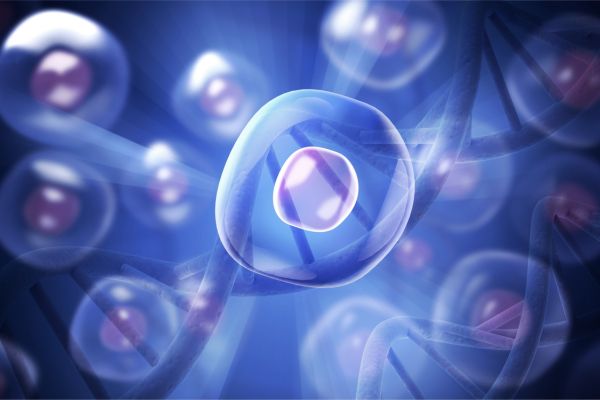
Exosomes are a type of extracellular vesicle released by cells. They contain biological cargo that can participate in cell-to-cell communication. MSC-derived exosomes have received particular attention because some of the biological effects associated with MSCs may involve substances released through paracrine mechanisms.
Importantly, exosomes are not miniature stem cells. They do not contain an entire functioning cell and cannot be treated as interchangeable with MSCs.
This distinction is why researchers sometimes describe exosome-based approaches as a form of cell-free therapy.
How Do Exosomes Communicate With Other Cells?
Understanding stem cell exosome therapy requires looking at cellular communication rather than direct cell replacement.
Exosomes can carry proteins, lipids, messenger RNA, microRNA, and other molecules. After interacting with recipient cells, this cargo may influence cellular signaling and biological behavior.
This process is connected with paracrine signaling, where cells affect nearby biological activity through substances they release rather than through direct replacement of damaged tissue.
Research involving MSC-derived extracellular vesicles has examined potential effects on inflammation, immune responses, angiogenesis, and tissue-repair pathways.
These mechanisms provide a scientific rationale for further research. They do not prove that administering exosomes will reliably regenerate tissue or improve a particular disease in patients.
Why Are MSC-Derived Exosomes Being Studied?
Interest in stem cell exosome therapy partly developed from research into the secretory activity of MSCs.
Scientists increasingly recognize that some observed effects of MSCs may involve the molecules they release into their surrounding environment. The broader MSC secretome can contain cytokines, chemokines, growth factors, and extracellular vesicles, including exosomes.
Researchers are therefore investigating whether specific extracellular vesicles could reproduce certain signaling effects without administering intact cells.
This has made stem cell exosomes an active area of regenerative research. Potential advantages proposed in scientific literature include easier storage or modification and avoidance of some challenges associated with living-cell administration.
These remain areas of investigation rather than proof of superior clinical outcomes.
What Does Current Research Actually Show?
Evidence for stem cell exosome therapy remains considerably stronger at the preclinical level than for routine clinical use.
Laboratory and animal research has investigated MSC-derived extracellular vesicles across neurological, musculoskeletal, cardiovascular, respiratory, wound-healing, and other models. An umbrella review published in 2025 found promising effects across preclinical studies but also identified substantial heterogeneity and methodological limitations.
Human research is developing. A 2025 review of clinical trials involving MSC-derived extracellular vesicles identified 66 eligible trials registered between 2014 and 2024. However, investigators reported major variation in characterization, dosage, administration routes, and outcome reporting.
These differences make it difficult to describe exosome therapy as one standardized intervention with predictable results.
Why Do Preparation and Standardization Matter?
A major challenge for stem cell exosome therapy is determining exactly what an exosome preparation contains.
Extracellular vesicles can differ according to the parent cell source, culture conditions, isolation technique, purification method, storage, characterization, and dose.
Two products described as MSC-derived exosomes may therefore have important biological differences.
Researchers have identified standardization of isolation, characterization, dosing, and potency as significant barriers to clinical translation.
At Stem Cell Medellín, any discussion involving regenerative products should therefore identify the actual biological preparation rather than relying on a broad term such as “exosomes.”
For patients, product specificity is essential for evaluating whether published research is relevant to what is actually being offered.
How Is Exosome Therapy Different From Stem Cell Therapy?
Another important part of stem cell exosome therapy is understanding that exosomes and stem cells are biologically different.
Stem cell-based treatments administer cells. Exosome-based approaches use extracellular vesicles released by cells.
Because exosomes do not contain intact living cells, researchers are investigating them as potential cell-free regenerative medicine tools. However, describing an approach as cell-free does not automatically establish that it is safer, more effective, or clinically proven.
The two approaches also cannot automatically share evidence. A clinical study involving MSCs does not prove that MSC-derived exosomes will produce the same outcome.
Patients should evaluate each product according to its own evidence, preparation, intended use, and regulatory status.
What Are the Regulatory and Safety Limitations?
A balanced discussion of stem cell exosome therapy must address regulatory status.
The FDA states that exosome products intended to treat diseases or conditions in humans generally require FDA approval and that there are currently no FDA-approved exosome products. The agency has also reported serious adverse events associated with unapproved products marketed as containing exosomes.
That does not mean exosome research lacks scientific value. It means promising experimental findings should not be presented as established clinical effectiveness.
Patients should ask about product origin, processing, quality controls, supporting human evidence, potential risks, regulatory status, and alternatives before considering any intervention.
What Should Patients Take From the Research?
The scientific rationale behind stem cell exosome therapy is centered on cellular communication. MSC-derived exosomes can carry biologically active molecules, making them interesting candidates for research into inflammation, immune modulation, and tissue responses.
Yet scientific promise and established treatment are not equivalent.
Current research still faces important questions about manufacturing, characterization, optimal dosing, delivery, potency, safety, and condition-specific effectiveness. These limitations explain why strong preclinical findings cannot automatically be converted into treatment promises.
Understanding exosomes as an emerging area of regenerative medicine provides a more accurate perspective than viewing them as proven replacements for stem cell therapy.
FAQs
What are exosomes?
Exosomes are small extracellular vesicles released by cells. They carry biological materials such as proteins, lipids, and nucleic acids that can participate in communication between cells and influence cellular signaling.
Is stem cell exosome therapy the same as stem cell therapy?
No. Stem cell exosome therapy involves cell-derived extracellular vesicles rather than intact stem or stromal cells. The approaches differ biologically, so evidence supporting one should not automatically be applied to the other.
Can exosomes regenerate damaged tissue?
Research investigates how exosomes may influence pathways associated with tissue responses and repair, but this does not establish predictable tissue regeneration in patients. Clinical effectiveness must be demonstrated for each specific application.
Is exosome therapy FDA-approved?
No exosome products are currently FDA-approved in the United States. Products intended to treat diseases or conditions generally require FDA approval, and the agency has warned patients about unapproved products.
What should patients ask before considering exosome-based treatment?
Patients should ask about the product source, preparation, supporting human evidence, known risks, regulatory status, and treatment alternatives. These details are more informative than broad claims about regenerative potential.